XMP Presets (Lightroom Classic)
To import an XMP preset file into Lightroom Classic:
- Open Lightroom Classic
- Select the Develop module
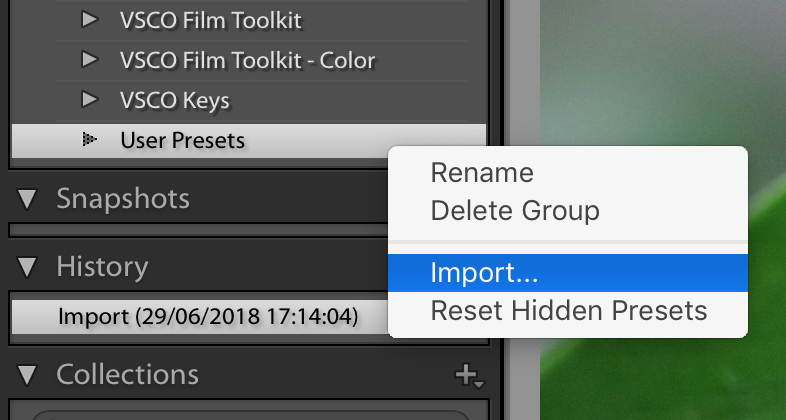
- Right-click on any preset group (e.g. User Presets, or Color).
- Click Import
- Select the downloaded .xmp file
Your new preset will be placed in a PixelPeeper group. If you downloaded the “full” version of the XMP preset, you’ll find it in the User Presets group.
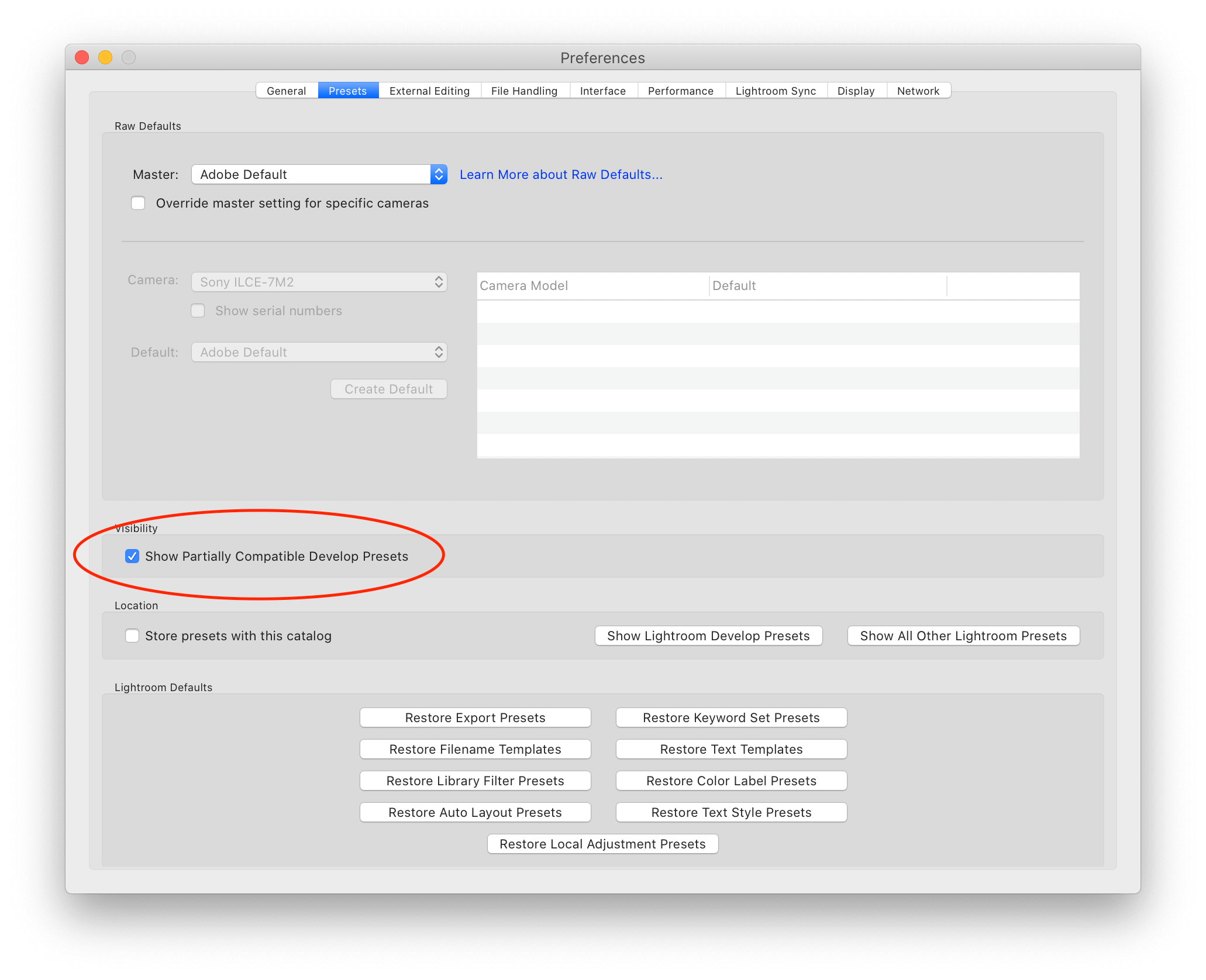
Imported presets don’t show up in Develop
- Open Lightroom Preferences, select the Develop tab
- Make sure to select Show Partially Compatible Develop Presets.
Without this setting, by default Lightroom will hide presets that can’t be fully applied. Most of the time it’s because of a missing camera profile.
Video: how to import a Lightroom preset from PixelPeeper
XMP Presets (Lightroom CC / Cloud)
Lightroom CC (the cloud-based version) handles presets slightly differently from Lightroom Classic:
- Open Lightroom CC (the cloud version, not Classic)
- Open any photo in the Edit view
- Click the Presets panel on the right side
- Click the three-dot menu (⋯) at the top of the Presets panel
- Select Import Presets
- Navigate to and select your downloaded .xmp file
The preset will appear under a new group in the Presets panel. If you’ve synced Lightroom CC with the cloud, the preset will also become available on other devices signed into your Adobe account.
Note: Lightroom CC syncs presets across devices, so a preset imported on desktop will eventually appear in Lightroom on your other devices (including iPad).
Lightroom Mobile Presets (iOS & Android)
PixelPeeper XMP presets are compatible with Lightroom for mobile.
For a more detailed walkthrough, see: How to Install Lightroom Mobile Presets (iOS & Android)
.lrtemplate Presets (older versions of Lightroom)
You have to put the downloaded .lrtemplate file in the Lightroom Presets directory
(e.g. in User Presets)
After that you’ll need to restart Lightroom.
How do I find the presets directory on my computer?
- Open Lightroom
- Select Develop module
- Right-click on a selected preset (Presets section on the left)
- Click Show in Finder (or Show in Explorer on Windows)
- Copy .lrtemplate file to the chosen directory (e.g. User Presets)
- Restart Lightroom
Troubleshooting
Preset doesn’t show up after importing
- In Lightroom Classic, go to Preferences → Presets and enable Show Partially Compatible Develop Presets. Lightroom hides presets that reference camera profiles you don’t have.
- Try restarting Lightroom after importing. Some versions require a restart to detect new presets.
- Verify the file extension is
.xmp(not.xmp.txt— some browsers rename files on download).
Preset shows but produces unexpected results
- The preset may have been created on a different process version. In the Develop module, check Settings → Process and make sure it matches the preset’s intended version (usually Process Version 5 or later).
- Some presets include camera-profile-specific adjustments that may look different on images from other cameras. You can reset the Camera Calibration section after applying the preset.
“Failed to import” error
- Make sure you’re importing an
.xmpor.lrtemplatefile, not a.ziparchive. Extract the archive first. - On macOS, if the file was downloaded from the internet, macOS Gatekeeper may block it. Right-click the file, select Open With → TextEdit to unblock it, then close and retry the import in Lightroom.
Related Resources
- Lightroom Preset Viewer — Preview what’s inside an XMP file before importing it, no Lightroom needed
- How to Copy a Preset From a Photo — Extract XMP settings from JPEGs
- How to Import Lightroom Mobile Presets — iOS and Android walkthrough