Lightroom Preset Viewer
PixelPeeper reads Lightroom preset files without Lightroom and turns their raw settings into a familiar visual panel.
Drop an XMP or legacy .lrtemplate file into the viewer above. You'll get a shareable page with the preset name, group and adjustments — no software to install and no account required.
You can also upload a JPG exported from Lightroom with develop settings included to inspect the edit embedded in the photo. If the settings are missing, try Look Match.
How It Works
- Drop your preset or photo — choose an XMP/.lrtemplate preset, or a JPG with embedded Lightroom edits.
- View all editing adjustments — see exposure, contrast, tone curves, color grading, HSL, split toning, sharpening, and every other Lightroom setting in a visual, Lightroom-style interface.
- Use what you find — inspect a preset before importing it, or turn compatible JPG settings into an XMP preset for Lightroom.
Turn JPG Files into Lightroom Presets
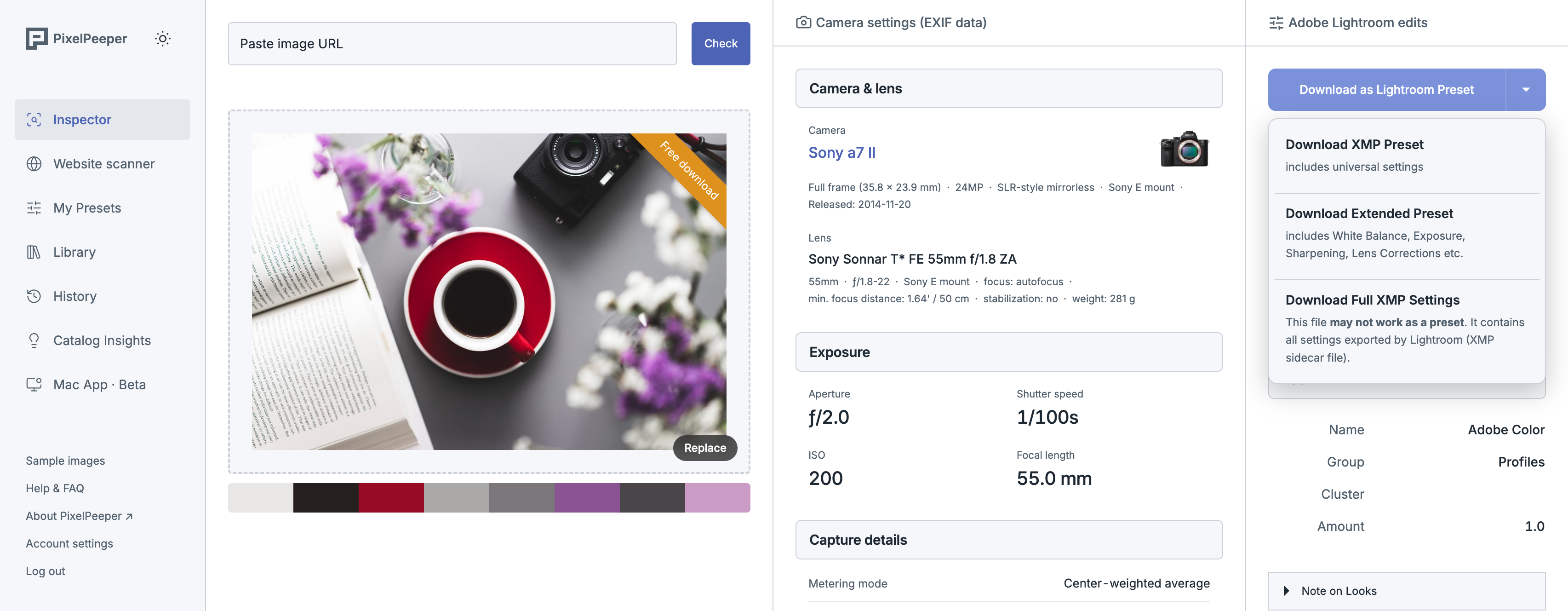
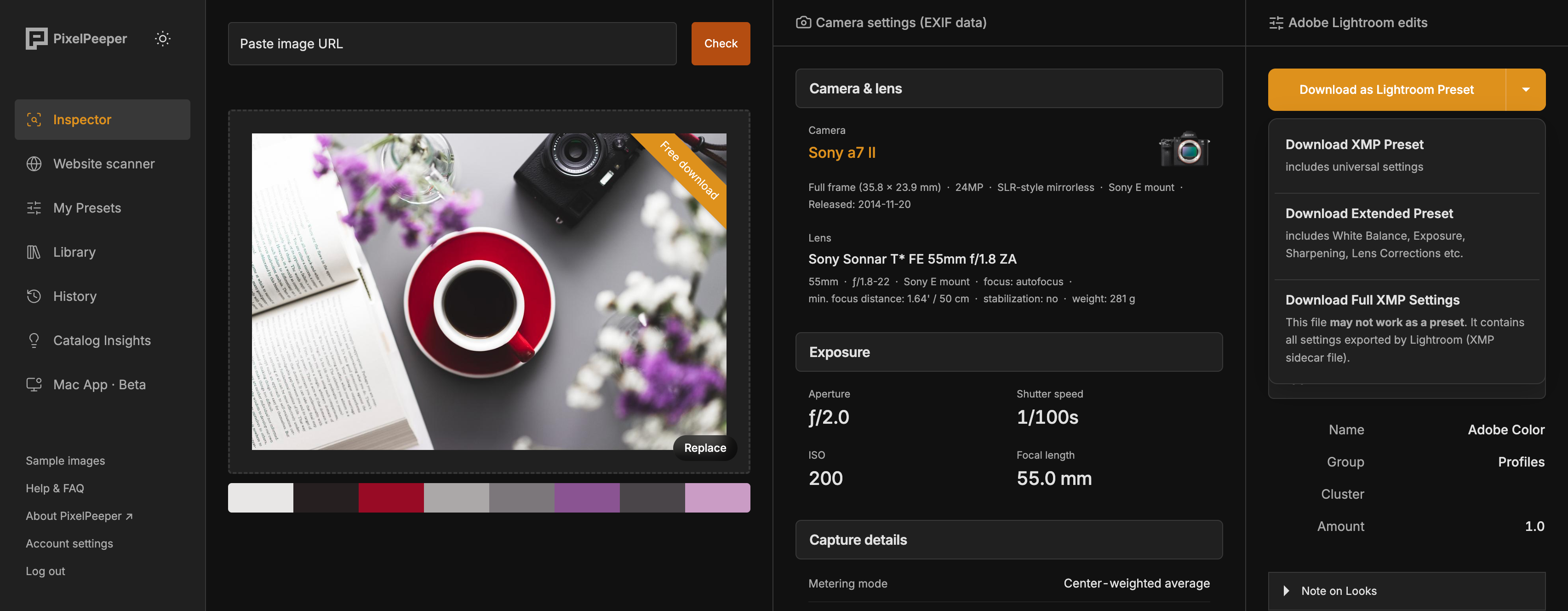
When you find a photo with metadata, you can download it as a preset, import it to Lightroom and apply to your own photos. Need help importing? See our guide on how to install Lightroom presets.
See also: How to copy a preset from a photo
Preset Finder
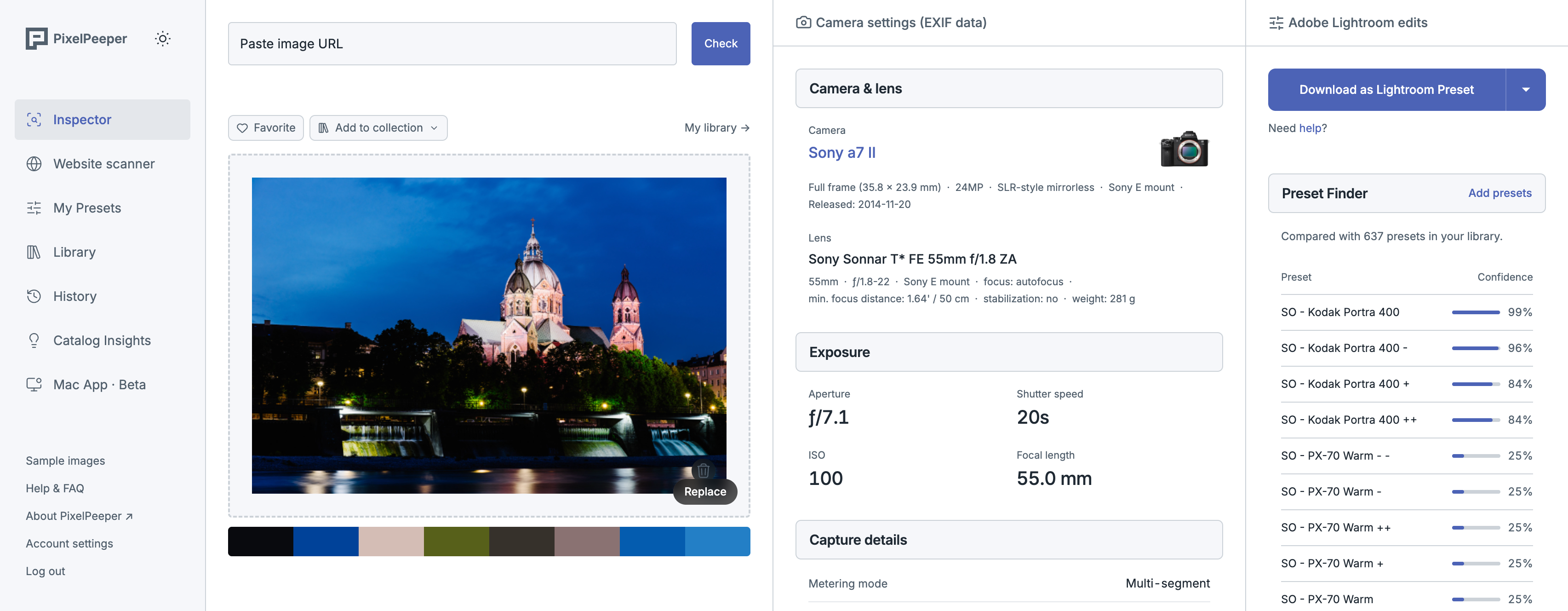
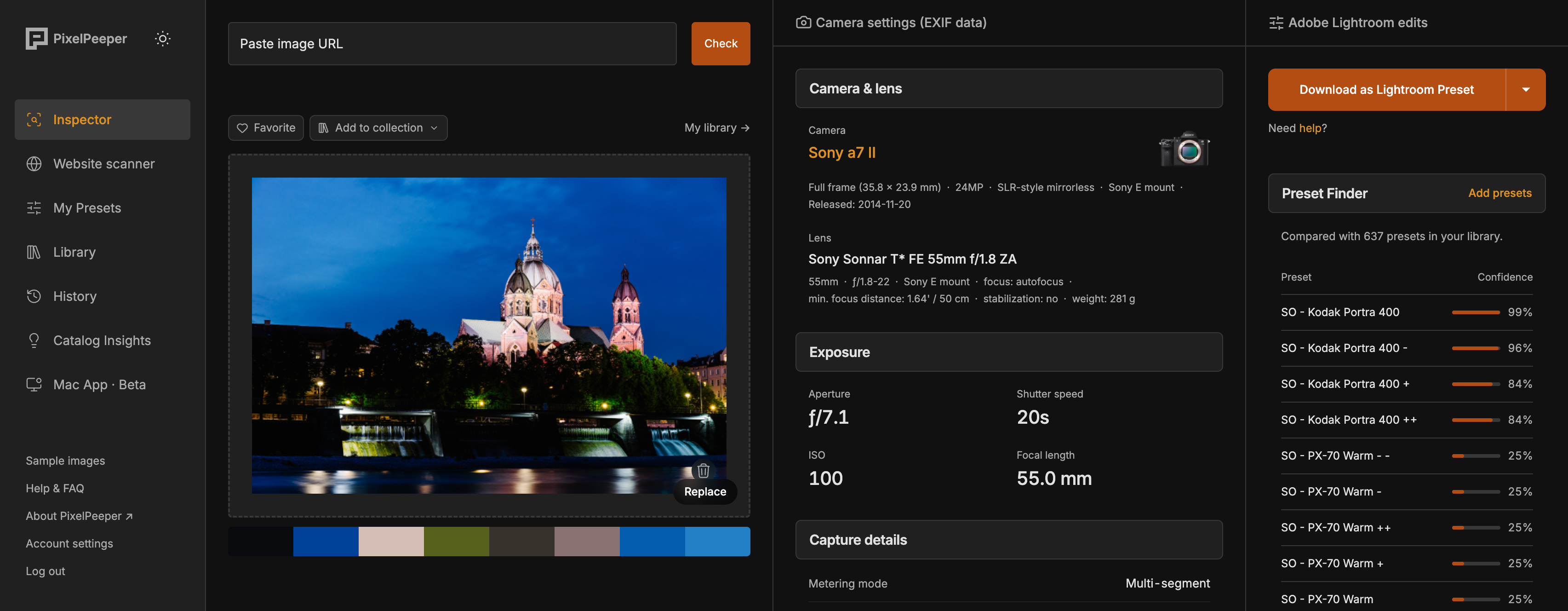
Whether you want to know which presets other photographers use or you'd simply like to know which one of your own presets you used in the past on the given photo, Preset Finder has you covered.
Upload your presets to PixelPeeper and drop a JPG image. Preset Finder will:
- scan all your presets
- show you which ones match the settings in JPG (ordered by confidence score).
See also: Frequently Asked Questions.
How to Open an XMP File Without Lightroom
Windows and macOS can't preview .xmp files natively — double-clicking one either fails or opens a wall of XML in a text editor. If you just downloaded a preset pack and want to see what's inside the XMP files before importing them, you have three options:
- Use PixelPeeper (no Lightroom needed) — upload the .xmp file to the preset viewer above and see every adjustment — exposure, tone curve, HSL, color grading — rendered visually, the way Lightroom would show it.
- Import into Lightroom — requires a Creative Cloud subscription; you won't see the settings themselves, only their effect after applying the preset. See how to install Lightroom presets.
-
Open in a text editor — works in a pinch, but you'll be
reading raw XML attribute values (e.g.
crs:Exposure2012="+0.35") with no visual context.
What is an XMP Preset File?
XMP (Extensible Metadata Platform) is an Adobe-developed standard for storing metadata in files. In the context of Lightroom, XMP files contain all the editing adjustments you've made to a photo — essentially a recipe that can be applied to other images.
An XMP preset file typically includes:
- Basic adjustments: Exposure, contrast, highlights, shadows, whites, blacks
- Tone curve: Custom curves for overall and per-channel adjustments
- HSL/Color: Hue, saturation, and luminance adjustments for individual colors
- Split toning/Color grading: Shadow and highlight color tints
- Detail: Sharpening and noise reduction settings
- Lens corrections: Profile-based or manual corrections
- Effects: Vignette and grain settings
- Calibration: Camera profile and calibration adjustments
When you export a photo from Lightroom with metadata included, these XMP settings are embedded in the JPG file itself. This is what allows PixelPeeper to read and visualize the exact edits that were applied.
How to Export Lightroom Photos with Presets Embedded
To ensure your Lightroom edits are readable by PixelPeeper (and preserved for your own reference), follow these steps when exporting:
- Open the Export dialog: In Lightroom, select your photo(s) and go to File → Export (or press Ctrl/Cmd + Shift + E).
- Choose your file settings: Select JPEG as the file format. Quality of 80-100 is recommended to preserve detail.
- Enable metadata export: In the Metadata section, select “All Metadata” or at minimum ensure “Include Develop Settings in Metadata” is checked. This embeds the XMP data into the exported file.
- Export and verify: After exporting, upload the file to PixelPeeper to confirm the Lightroom edits are visible.
Note: Some export presets or workflows may strip metadata. If you don't see Lightroom edits in PixelPeeper, double-check your export settings.
Frequently Asked Questions
Do I need a Lightroom subscription to use PixelPeeper?
No! PixelPeeper works independently of Adobe Lightroom. You can view XMP presets and Lightroom edits embedded in photos without having Lightroom installed or a Creative Cloud subscription.
How to view a Lightroom preset without Lightroom?
Drop your XMP preset into PixelPeeper to see exposure, tone curves, color grading, HSL, and more in a visual interface similar to Lightroom's Develop module. No software installation or signup required.
What is an XMP preset file and how do I open it?
An XMP (Extensible Metadata Platform) file is an Adobe-developed format that stores Lightroom editing adjustments — exposure, contrast, tone curves, color grading, sharpening, and more. You can open XMP files with PixelPeeper to visualize the settings, or import them directly into Lightroom Classic or Lightroom CC.
Can I import the downloaded preset into Lightroom Mobile?
Yes, PixelPeeper presets can be imported into Lightroom on iOS and Android.
Why can't I see the Lightroom edits in some photos?
Not all photos contain XMP metadata. The edits are only visible if the photo was exported from Lightroom with the "Include Develop Settings" option enabled. Photos from social media, stock photo sites, or other sources typically have this metadata stripped.
What's the difference between XMP presets and LUT files?
XMP presets are Lightroom-specific and contain detailed editing parameters that can be adjusted after applying. LUTs (Look-Up Tables) are color transformation files used across various software but are fixed — you can't adjust individual parameters. PixelPeeper works with XMP presets, not LUTs.
Can I upload my own XMP preset files directly?
Yes. Drop an XMP or .lrtemplate file into the viewer at the top of this page. You can visualize its settings immediately without creating an account. Signed-in users can optionally save it to My Presets afterward.
Have more questions? Check out our FAQ page.
Lightroom Resources
- LRTEMPLATE to XMP Converterconvert legacy Lightroom presets to XMP
- Lightroom Preset Finder identify which preset was used on a photo
- Lightroom Preset Examples explore real photo edits and download presets
- How to Copy a Preset from a Photo
- How to Create a Preset from a Photo
- Estimate Lightroom Settings with Look Match a starting recipe when metadata is missing
- How to Install Lightroom Presets
- How to Import Lightroom Mobile Presets (iOS/Android)